

Time to think, and someone to hold it with you

This isn't only about funerals in the traditional sense. It's just as much about memorials and celebrations of life, held once there's room to breathe — and, increasingly, about ceremonies arranged in advance, together, while there is time for you to plan.

I also work as an End of Life Doula, which means my support doesn't have to start after someone has died. If you'd rather talk things through beforehand — your own wishes, or someone else's — I can sit with that conversation too.

A traditional funeral service is still very much something I offer. It's just no longer the only shape a farewell can take.

Tasmanian coastal mountains silhouetted at dusk, a still bay reflecting the fading light
Photo credit: LilLiz Photography

What I actually do

I come to you, usually at your home, and I listen. I ask about the ordinary things as much as the milestones — the phrases they used, what they were like in a kitchen, what they were impossible about.

Then I write the service: the words spoken at the beginning and end, the shape of the tributes, the readings and the music, and the moments where nothing needs to be said at all. On the day I hold the room so your family can grieve rather than manage.

If you've already engaged a funeral director, just let them know you've chosen me as your celebrant. From there, the two of us work directly together on your farewell.

Nobody should have to perform on the worst week of their life. If you can't get through a tribute, I'll read it for you.

A double rainbow arcing over green Tasmanian farmland after rain
Photo credit: LilLiz Photography

How I can help

Ceremonies for a life that has ended

Every one of these is written from scratch. There's no template underneath.

Funeral services

For funerals held soon after a death, I work alongside your funeral director and write a personal service for the day.

  • Guidance on readings, music and who speaks when
  • Eulogies read on your behalf, if that's easier for your family

What happens next

From your first call to the day itself

If a funeral director is involved, we work to their timeline. If it's a memorial or celebration of life, there's usually more room to breathe.

  1. You call or write

    Tell me as much or as little as you can manage. If I'm not the right person, or I'm not available, I'll say so immediately and point you to someone who is.

  2. We meet

    I'll come to you, usually at your home, and we sit at the table together for an hour or two. Bring photographs, bring whoever wants to be there. There's nothing to prepare beforehand.

  3. I write the service

    I draft everything and send it to you to read. Correct anything that isn't right — names, dates, emphasis, a story told the wrong way round. Nothing is spoken that you haven't approved.

  4. On the day

    I arrive early, check the sound and the order of service, and quietly look after the people who are speaking. Then I hold the room from beginning to end.

  5. Afterwards

    You'll receive a copy of the service, so the words spoken that day don't disappear with it.

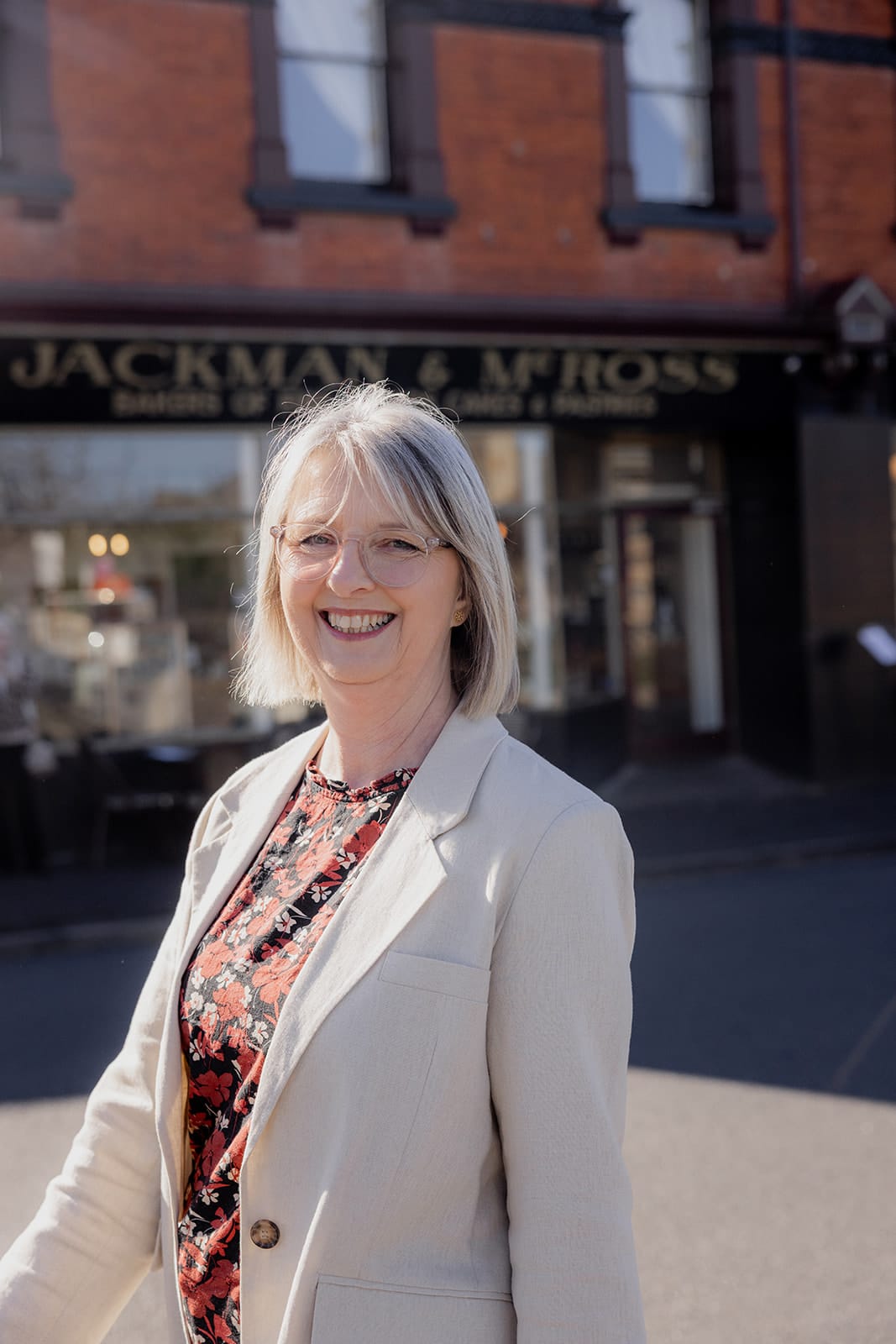
Mary Figg smiling warmly on a Hobart street
Photo credit: Rosie Hastie

In their words

Families I have walked beside

“I engaged Mary to perform a celebration of life memorial for my Dad. Mary met with my Mum, my brother and I and helped us with the eulogy and the running of the service. She not only liaised with the funeral home but with family who wished to speak at the memorial too. Mary was very professional, well spoken and caring. I have absolutely no hesitation in engaging Mary again myself or recommending her for any celebrant duties. Mary was a pleasure to deal with.”
Elizabeth Russell — March 2025
“Having worked with Mary and watching her in action I can safely say no one would be disappointed in engaging her services. Such an honest and warm person I couldn't imagine anyone being in safer hands with her services.”
Nathan Owen

If you need more support

Grief support in Tasmania

A ceremony helps, but it isn't the whole of it. If you or someone in your family needs to talk to somebody, Griefline (1300 845 745) and Lifeline (13 11 14) both operate nationally, and your GP can refer you to bereavement counselling locally.

Questions

What families usually need to know

Call me when you're ready

There's no form you need to fill in first. Ring, or send a few lines, and I'll take it from there.