How I Structure a Wedding Ceremony
Every wedding is unique, but having a structure keeps the day flowing, keeps guests engaged, and covers all the legal requirements.
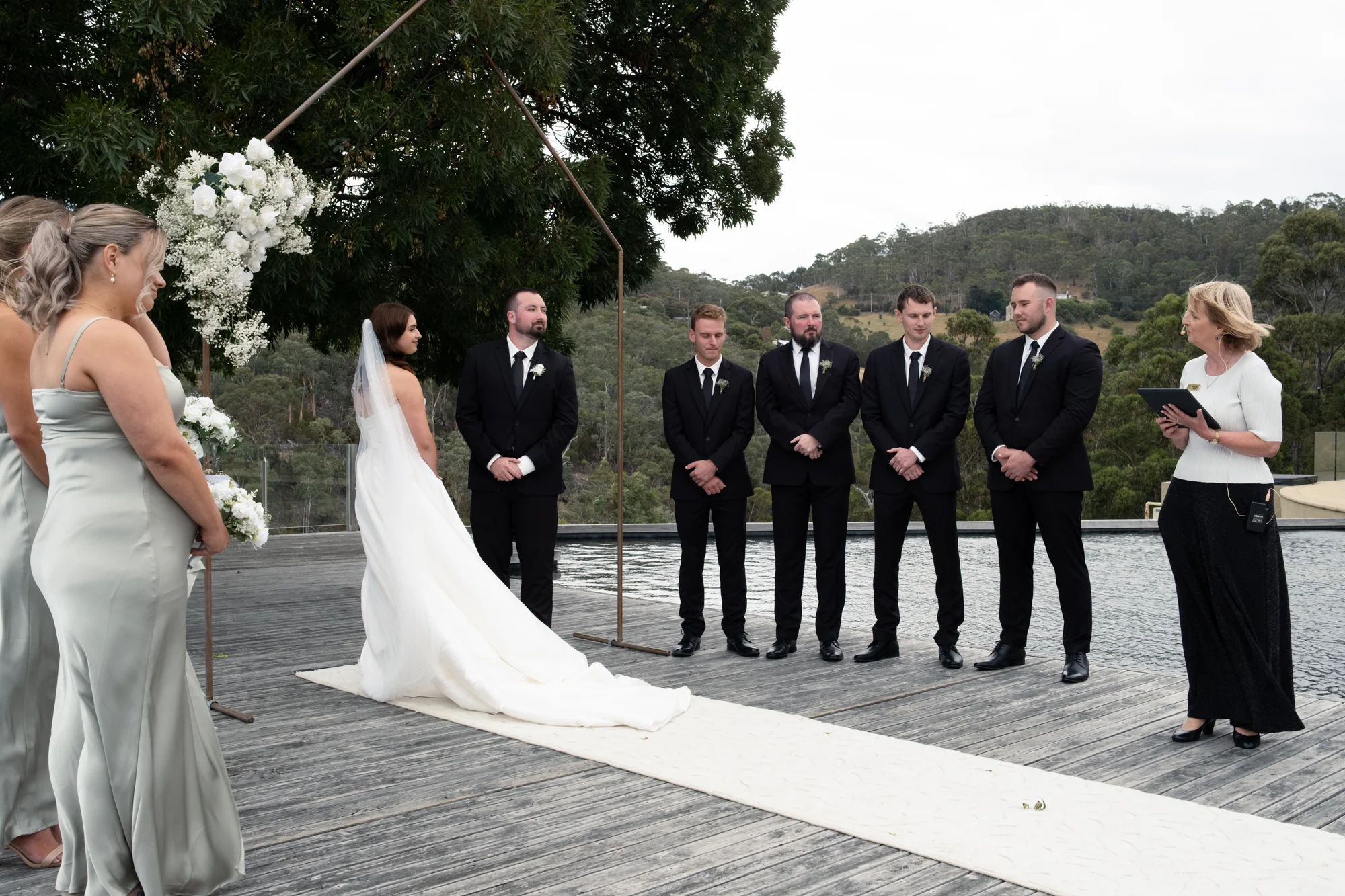
When I got married, the celebrant used a one-size-fits-all script — the only thing that changed was the names. Looking back, it was… well, functional, but it didn’t feel personal at all.
Fast forward to today, and my approach as a celebrant is completely different. Every wedding is unique, and the ceremony should reflect the couple’s personalities, their story, and the people who matter most to them.
One of the questions I get asked is, “Do you follow a script?” The answer is yes… and no. Every wedding is unique, but having a structure keeps the day flowing smoothly, ensures guests are engaged, and — importantly — covers all the legal requirements.
I always start with the legal parts, because they’re the foundation of your marriage. Around that, everything else can be personalised to reflect your personalities, your story, and what’s important to you as a couple.
Here’s a typical structure I follow:
Housekeeping: A gentle reminder for guests — phones on silent, photographer location, or anything else that keeps the day running smoothly.
Welcome: I introduce the ceremony, set the tone, and acknowledge the significance of the day.
Commitment from Guests: Sometimes I invite guests to witness and support the couple’s commitment — a lovely way to involve friends and family.
Couple’s Perspective: I often include a short reflection on what marriage means to each partner, honouring their values and love.
Couple’s Story: Sharing how the couple met, fell in love, and built their life together. This is usually heartfelt, sometimes funny, and always personal — it helps guests feel a deeper connection to the journey being celebrated.
Readings or Poems (Optional): Many couples like to include a favourite reading, poem, or song lyric — a beautiful way to involve family or friends in the ceremony.
Legal Vows: The essential words that make the marriage official. These must be said in order and recorded correctly for legal purposes.
Personal Vows: Many couples write their own vows — a moment of intimacy, reflection, and sometimes a few happy tears.
Ring Exchange: A symbolic gesture of love and commitment.
Declaration: The moment the couple is formally pronounced married — usually met with cheers, applause, and plenty of smiles.
Signing of Legal Paperwork: The final legal step, often accompanied by music or a special moment for photos.
Announcement: Finally, the couple is announced to the guests — husband and wife, partners for life, or however they choose to be introduced.
While this is my standard framework, everything can be adapted — readings can be added, family and friends can be involved, rituals can be included, and the order can shift to suit the couple. The only non-negotiable elements are the legal parts, which must be included and in the correct order.
At the end of the day, a wedding ceremony is about telling a story — your story. The structure is there to guide the flow, but within it is infinite room for love, laughter, personality, and creativity. That’s what makes every ceremony I officiate unique, memorable, and truly special.